The Swedish candy craze has taken San Francisco by storm. It seems as if every week a new specialty candy store is opening in the city. Lil Sweet Teat opened in June and Plock opened just recently in September, right off Union Street.
These stores offer a variety of options—both sweet and sour—with many different textures, shapes and brands. The option to pick and mix allows customers to sample many different flavors as opposed to having to stick with only one type. Residents seem to be loving these Swedish candy shops; just walking along Chestnut Street, you’ll likely spot at least two people with bags from Lil Sweet Treat.
“I love Swedish candy,” freshman Emma Kluft said. “it’s so great that they are opening stores in San Francisco,”
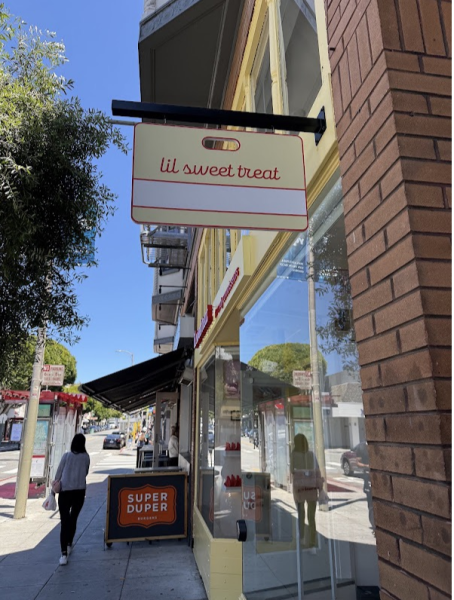
Plock, Lil Sweet Treat, Giddy Candy and other stores have had great success in the city. Because of this, even well-known brands, such as IT’SUGAR, have hopped on the Swedish candy train and started selling varieties of Swedish candy. But why are people suddenly obsessed with this specific style of candy? Is it just a trend?
Swedish candy is made with no artificial dyes and cleaner ingredients, with generally fewer to no additives. On top of that, it is gelatin-free, something that is especially appreciated by those who don’t eat animal products, and also cruelty-free.
“I love Swedish candy,” says senior Wren Walton, “it’s so cool that we have places for it in the city now.”
Aside from that, Swedish candy is uniquely made in iconic shapes that are fun and funky. It also has interesting flavor combinations that break the mold of the general mass candy market and hybrid textures. Swedish candy is famous for combining sweet and salty flavors as opposed to sweet and sour. So not only is Swedish candy higher quality and tastes better, but it’s also more fun to eat.
In short, Swedish candy is a whole experience, from picking out the candy to actually eating it. This is intentional because originally, eating candy in Sweden was typically reserved for Saturdays, a practice popularized by a 1950s health campaign. This made it a special experience for children to go to candy stores on the weekends to pick out treats for the weekend.
“I love how much better the quality of Swedish candy is compared to American,” Head of Convent Rachel Simpson said “It has a much better texture and the perfect amount of sweetness.”
While this candy is so high quality, it does come at a cost. At Lil Sweet Treat, it is $5.10 per quarter pound, so $20.40 per pound, and at Plock, it is $18 per pound, hence why it’s marketed as a once-in-a-while special treat.
These stores have been an unexpected but great addition to the San Francisco neighborhoods and are slowly becoming staples in the community for people of all ages.
“Usually, my mom has to bring Swedish candy back from Europe for me,” Kluft says, “but I’m so glad that it’s much more accessible now.”