The Women in Leadership series shines a spotlight on women leaders across the Bay Area. Each guest answers the same five questions about the experiences that shaped their paths and shares their advice for young women. This series aims to highlight the groundbreaking experiences of the women who preceded us and inspire our generation to embark on our own journeys.
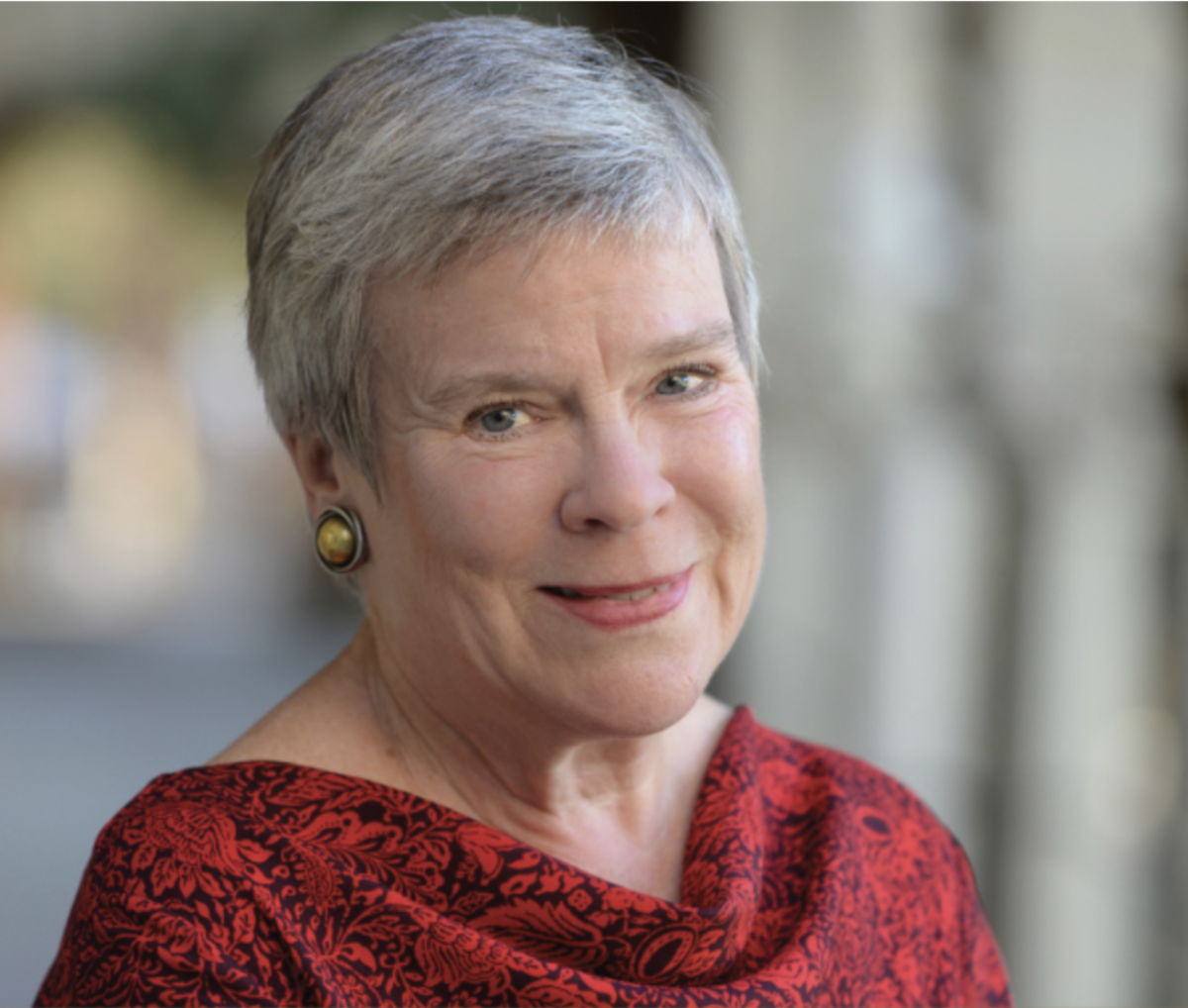
The Honorable Rose Gottemoeller served as Assistant Secretary of State for Arms Control, Verification and Compliance, where she served as the chief U.S. negotiator for New START. Gottemoeller then worked as the Under Secretary for Arms Control and International Security at the U.S. Department of State, where she advised the Secretary of State on nonproliferation, arms control, and other political-military affairs. From there, Gottemoeller served as Deputy Secretary General of NATO from 2016 to 2019. Currently, Gottemoeller is a Lecturer and Senior Research Fellow at Stanford University.
Our conversation from November 18, 2026 was edited for clarity and brevity.
What was the moment that inspired you to pursue your chosen career path?
I always say that I was a Sputnik baby. I remember when the Soviet Union put up an artificial satellite for the first time in 1956. I was quite small at that age and living in Columbus, Ohio, but my father was very interested in science and innovation. He took me out into the front yard and pointed up at this little dot of light in the sky and said, “Oh, look, the Russians have put up a satellite, isn’t that cool?” I had no idea what he was talking about, but I always say my interest in pursuing areas of science and technology in cooperation with the Russians began then. And it did, in fact, as the whole space race that followed inspired my interest in the Russian language. In those days, the federal government was supporting Russian language studies in high schools across the country. So while I was in high school, I managed to study three years of Russian. Then I went to Georgetown University and majored in Russian. I think that, because of the Space Race pushing me into the Russian language, and then the field of studying the USSR, I call myself a Sputnik baby.
What was a time in your career that was especially challenging for you as a woman?
Well, I’ll tell you quite honestly, it was very difficult in the 1980s. I was working full-time at the RAND Corporation, and my husband, Raymond Arnado, was working full-time at the State Department, also in a very responsible job at that point and traveling a lot. I had two small children at home, and I think it’s true for any set of parents when they’re working full-time and have small children at home – it’s very, very challenging. But I do consider that to be a very formative period of my career because I learned that, even if I’d been up all night because the kids were sick, I could still go and do a meeting in the morning. It teaches you what you’re made of to have to both raise small children and work full-time. That was probably the most challenging part of my life, but one that was very rewarding in the end. My two sons are in their 40s now, and they have their own kids. I try to make sure they get the same message: It’s hard right now, but it does pay its rewards.
What do you see happening in the world that you are very excited about?
Oh, I’m very excited about the news out of Shenzhen today. The three presidents [Presidents Donald Trump, Xi Jinping, and Vladimir Putin] agreed to work together on strategic stability and nonproliferation. That is, to me, code for being willing to work together on constraining nuclear weapons and addressing nuclear risks. I think this is a really exciting development, and I hope that it will pay some dividends. We’ve been trying to get the Chinese to talk to us for a long time about the risks from their modernizing nuclear weapons program, and we’re always worried about the Russians, especially in this terrible war of aggression against Ukraine. But they have not been willing to come to the negotiating table to talk about placing constraints on nuclear weapons. I hope that this means more cooperation. Today, they reaffirmed, and this is important, they reaffirmed that a nuclear war cannot be won and must never be fought. That’s really a very traditional statement that nuclear states make regularly, but it’s good that they reconfirmed it, the three of them together. And it says the three countries will conduct a dialogue on reducing nuclear risks and preventing the proliferation of nuclear weapons. I do think that’s a very exciting development, in my opinion, and it just happened overnight.
What do you see in the world that you would like to see change?
Oh my gosh, I’d love to stop this war in Ukraine. Russia’s aggression against Ukraine, in my opinion, is an egregious affront to international law at a time in the 21st century when we thought the notion of international borders, sovereignty, and independence were not going to be challenged, at least in Europe. Perhaps we were naive to think so, but certainly Russia started this war of aggression in the heart of Europe. And, you know, I worked as Deputy Secretary General of NATO for three years, so it’s a big issue for NATO and has reaffirmed the necessity of NATO’s deterrence and defense mission. So, to my mind, we must consider how to stop that war and also stop the war in the Middle East and somehow figure out how to resolve the differences now so evident between Iran, countries in the region, and the United States. I’m afraid we’re in a kind of deep hole at the moment trying to solve the Middle East war. Unfortunately, I believe it’s one that our president brought on us by starting the war, and the Israelis as well by thinking that somehow he could kill off the Iranian regime and the whole country would agree to work with us. It actually stiffened the Iranian spine, and it’s led us in the opposite direction to defiance on the part of the Iranians. It’s a very difficult circumstance. If I could somehow snap my fingers and solve those two wars, I think we would be on much better and more stable footing. That doesn’t say that there aren’t other important conflicts around the world. And I know there are many, many difficult conflicts around the world— in Sudan, South Sudan, in the Horn of Africa. Many people are starving and constantly threatened by violence. So of course I would love to solve all situations of conflict of this kind, but I guess at the top of my list would be to solve Ukraine and the war in the Middle East.
When you speak with young women about leadership, what advice or lessons do you most hope they take away?
Well, the first one that I always say is don’t apologize because that starts people doubting you from the very first moment you speak. Another thing I like to say to young people, both men and women, but it’s something especially for young women, is to take good risks. I heard one other woman who was talking about this say it’s like you grab at the brass ring on the old merry-go-rounds – you had to grab at the brass ring as you were going by. It’s taking good risks. You have to check to make sure that they are good risks when a sudden job offer comes along, that it is truly one that is beneficial and would help you in your career or in your continuing education. But nevertheless, it’s a good thing once you’ve done your due diligence to take a risk, even if it takes you out of your comfort zone. The example I like to give was when I was offered to go to NATO to be the Deputy Secretary General when I was quite advanced in my career. I’d been working on nuclear policy issues with the USSR and with Russia for 40-plus years when all of a sudden President Obama asked me if I would like to be Deputy Secretary General of NATO. I did have to apply; it wasn’t handed to me. Once I was offered the job, I took it because it would take me out of my comfort zone, from working bilaterally with the Russians on nuclear issues to suddenly having to deal with 27, at that time, allies and having to get more accustomed to dealing with them on a multilateral basis. Bilateral and multilateral diplomacy are much different, so it took a lot to get used to multilateral diplomacy. It was a good learning experience, even though I was on a steep learning curve in my 60s. So I always say, grab for good opportunities, take good risks, and if you’re on a steep learning curve, it’s good for you.