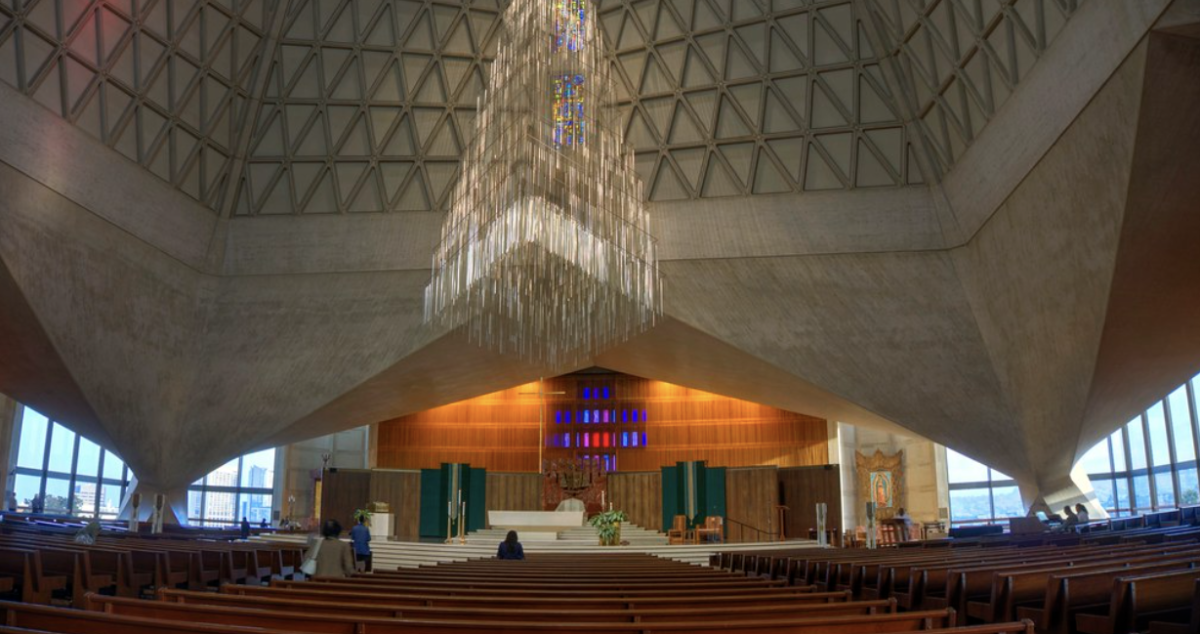
This Monday, at 7:30 p.m., I walked into the basement of St. Mary’s Cathedral and checked in along with the rest of my junior classmates. We were all gathered for the annual junior service retreat, most of us expecting it to just be a fun grade bonding trip or another service opportunity. I was one of those not anticipating anything super memorable, but little did I know, some of the activities I was given the opportunity to engage in would not only deeply affect me, but also probably affect my outlook on many things for the rest of my life.
Once everyone had arrived, put away their things, had some pizza and settled, the chaperones called out attention and sorted us into the groups we would be in for the following day’s service. I learned that I would be in the “Faithful Fools” group, a non-profit which I had never heard of, and after asking the other members of my group, it seemed we all were unaware of what our service the next day would entail. After a quick group bonding activity, Spiritual Life Chair and head organizer of the event, Paul Pryor Lorentz, began a speech about St. Francis’ life and how this service trip is modeled after his values and spiritual journey. Everyone was then given journal prompts relating to service intended to allow us to reflect on our past service along with thinking about our future. One question asked that particularly resonated with me was the question: “If service and serving others became a part of your identity and not just an event, what would shift in your life?”
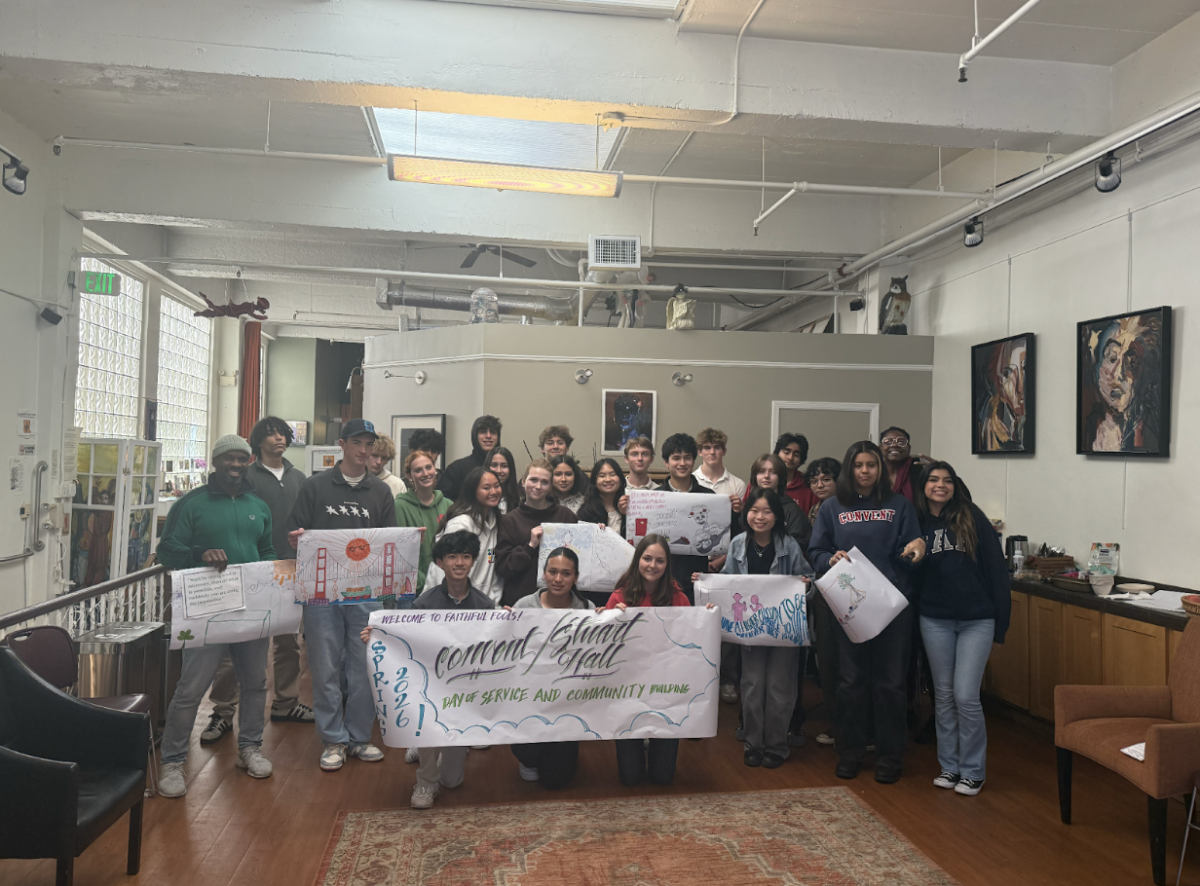
Even after moving on from the gathering and getting ready to go to sleep, that hypothetical stuck in my mind, and while getting ready for service the next morning, my focus was still hung up on that idea of seeing service as identity. Fittingly, the very first activity organized by the program director of the Faithful Fools nonprofit, Silena Layne, was for the group to craft an interlocking yarn web, each member stating what service meant to them as its intricacies formed. Each response from my peers not only taught me a little more about the impact of service, but also brought forth aspects of my classmates that I never would have realized if not for looking through the lens of service being identity, all thanks to one journal prompt.
After a solidaristic noticing walk through the Tenderloin to reach the Faithful Fools community center, it was time for us to begin the important conversations and activities that our service was about. I’ll admit, at first I was wary of the idea of “metaphorical service”. I didn’t understand how we would be having an impact if we weren’t literally doing physical work, but I quickly found how that was not the case, as our first activity was certainly impactful, just not in the way I thought before. We began to discuss ACE (adverse childhood experiences) scores, going through a questionnaire that is given to children 12 and younger. Afterwards, we went through and discussed certain statistics about ACE scores and how drastically they affect one’s life and health. The conversation was somber, serious and very informative. One specific fact that stood out to me was that nearly 35 million U.S. children have experienced one or more types of childhood trauma, and 1 in 6 have been subjected to 4 or more. The weight and severity of what was discussed entirely shifted many of my ideas around households and backgrounds, and I’m sure most others in that room felt the same.
Not all large impacts are made through hands-on approaches. Sometimes, a single moment that shifts a perspective can make the largest difference. On my walk home from the retreat, as I thought over what I had the opportunity to experience, I realized that one beautiful thing about opening up your awareness is that there is no going back. Nothing will make me un-realize the impact that service has on me; there’s no such thing as an anti-epiphany. Although it barely lasted a day, the Junior retreat’s effects will certainly permeate lifetimes.