In Feb., Latin students will travel to Pompeii, Rome and Florence, immersing themselves in Roman culture to enrich their study of this classical language.
“It was really cool to see what we had talked about in class like different art pieces,” senior Noella Tae said. “My favorite things I saw were probably the Bernini sculptures. They were sculpted from one slab of marble and portray many emotions,”
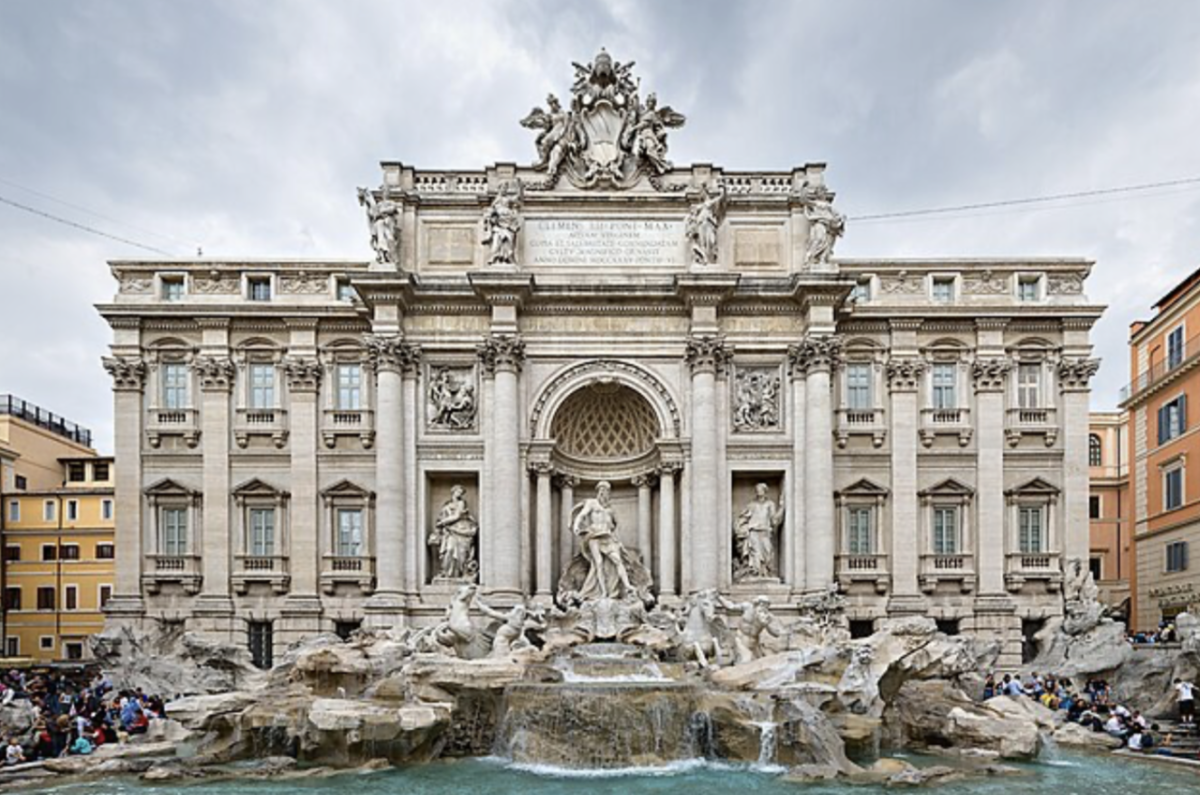
Flying out on the Friday before February Break, students will first journey to Pompeii and view the city’s carefully preserved ruins. On the following day, the group will head to the iconic city of Rome, taking a deep dive into Roman history and culture. In Rome, they will have the opportunity to visit renowned museums and see the wonders of Roman architecture such as the Colosseum, Pantheon and Circus Maximus. Finally, the students will spend a day in the birthplace of the Renaissance, Florence, before returning to the U.S.
Beyond the many amazing sites, this trip ultimately bridges Latin students to the land of the language’s origin. Historically, Latin arose in the region of Latium where the city of Rome was founded. From the myths of Romulus and Remus to the reigns of Rome’s mighty emperors, Latin developed into a language of profound expression and classical value.
“Everything we know about Latin is from Rome and the Roman Empire,” freshman Liliana Inglin said. “When you’re actually there, you really feel the culture around you and are literally stepping into the past.”
However, unlike in ancient Rome, Latin is no longer a spoken language and often learned for reading the works of Roman writers such as Ovid, Virgil and Cicero. This raises the question of the importance studying Latin has in the modern era and what benefits the language possesses beyond history and classics.
Studies have shown that learning Latin as a student can have benefits across academic subjects and boost problem-solving skills. Being proficient in the language has also been known to put students at an advantage in careers such as law, medicine, and linguistics.
“What the study of Latin really does is teach students how to think,” Latin teacher David Jacobson said. “Because of the complexity of the language, the constant puzzle-solving that goes into reading has tremendous benefits to being able to perform almost any sort of intellectual task.”
In all, the Rome trip does much more than just connecting students to the marvels of Roman history. These travels open up a new perspective on Latin, guiding students to success in numerous aspects of their lives.
“The syntax in Latin poetry has helped me to automatically learn poetic styles in English,” Tae said. “I can go further into certain studies using what I know about Latin.”