
Sunday, Nov. 2 marked two major milestones for the International Space Station: 25 years of continuous human presence aboard the space station, and the announcement of the station’s official retirement in the year 2030.
“I’m sad that it’s closing,” junior Trinity Joa said. “I think that the ISS is an important connection for us to space and for the different countries that are a part of the ISS,”
The retirement of the International Space Station is in large part due to the aging of the station’s primary structure, resulting in increasingly costly maintenance, according to NASA. NASA has laid out the International Space Station Transition Plan in order to safely deorbit the space station and initiate a seamless transition to commercially owned and operated space stations. This transition is meant to enable NASA to place a greater focus on its Artemis missions to the Moon and preparations for manned explorations of Mars.
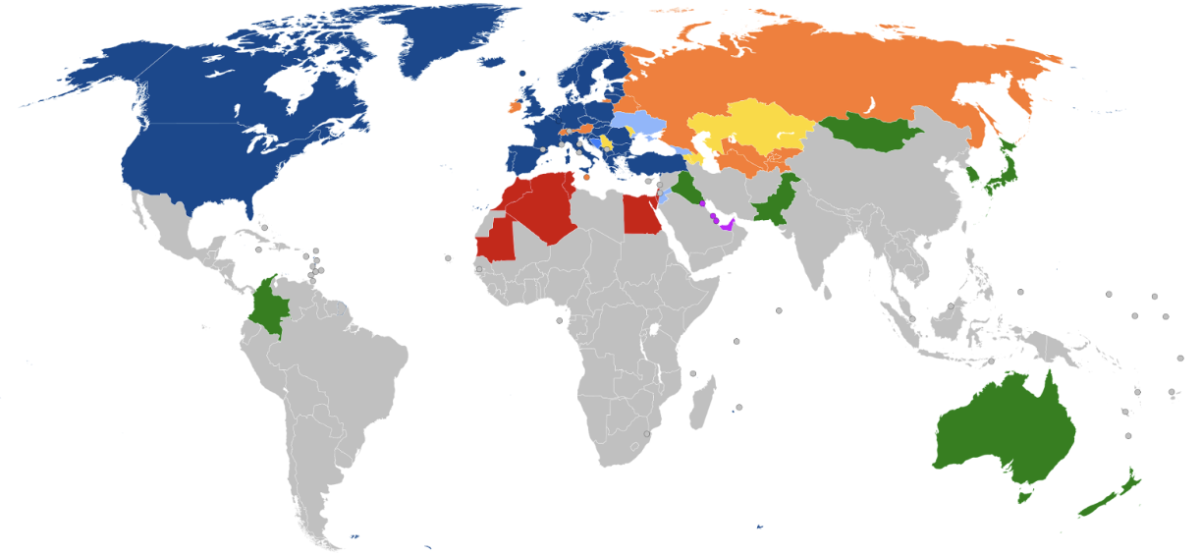
The construction of the International Space Station began in 1998 with the launch of the first two modules of the space station: the Russian-built Zarya module (meaning “sunrise” in English) and the U.S.-built Unity module, according to NASA. The construction of the station along with its continuous maintenance was undertaken by the space agencies of the United States, Canada, Europe, Russia and Japan, comprising a total of 15 countries.
The International Space Station’s 25th anniversary of continuous human presence marks 25 years of ongoing research aboard the station in fields of study ranging from biology to astrophysics. Over 4,000 experiments have been conducted on the station by scientists from over 110 countries.
“Since 2001, we have not just been citizens of this planet,” science faculty Colin Elliott said. “The ISS is the first time that we as a species have established a permanent presence in space.”
Though ground-breaking work has been done aboard the International Space Station, the station’s retirement alludes to the fact that countries are moving away from working together. With the station’s retirement, the “international” aspect of the space station has started to fade away as countries focus on their own scientific endeavors rather than the discoveries they can achieve through collaboration.
“I think the ISS is important to space exploration,” freshman Kara Wong said. “But also, since it’s the International Space Station, it should help unify the countries.”
Many believe that the retirement of the International Space Station is a major loss to not just scientific advancement but to the furtherance of international relations and collaboration within our world. This poses the question of what will be in store for future generations in the realms of both science and society on the planet.
“It is a little concerning that something research-based and apolitical like the International Space Station is disbanding and people aren’t working together,” Joa said. “We’ll get further if we all collaborate.”