
Did you wake up this Sunday feeling more rested than usual? That is likely because Daylight Saving Time began this past weekend. Every year on the first Sunday of Nov, every clock is either manually or automatically changed so that we “fall back” from the hour of 2 a.m. back to 1 a.m., adding another hour to the night. Similarly on the second Sunday of March, everyone “springs forward” an hour, going immediately from 2 a.m. to 3 a.m.
“[Daylight Saving Time] can help if you are someone who needs to stay out late during summer,” sophomore Taryn Krow said. “It is great we get a longer time to be out later and it’s still bright. And if you’re someone who wants to get up early [in the fall or winter], it is great that you can get up and it doesn’t look like it’s still nighttime,”
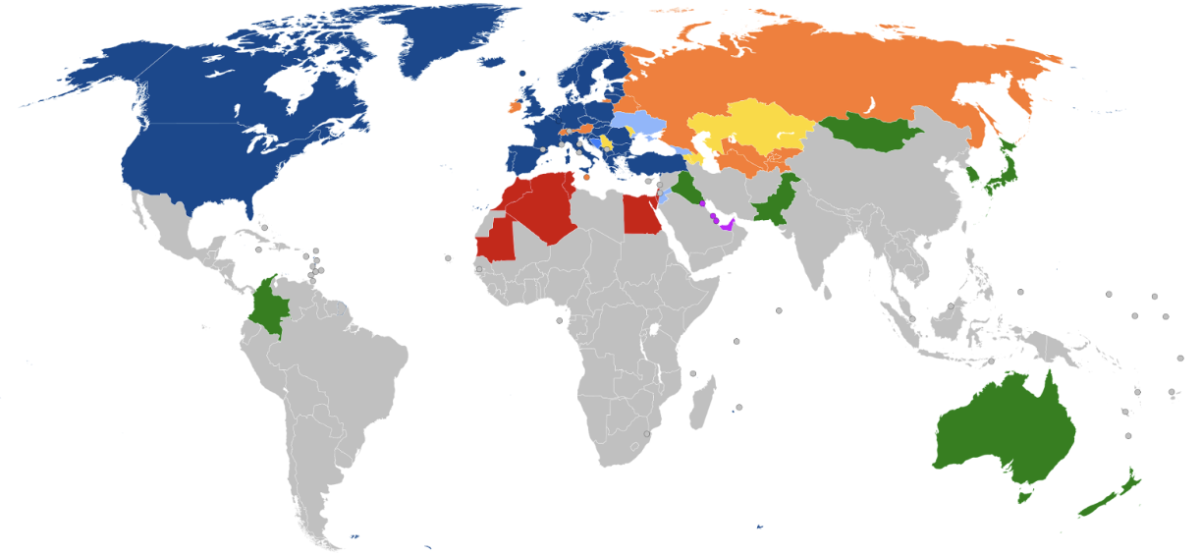
Daylight Saving Time was first created in Germany in 1916 and was introduced to the United States in 1918 as an energy saving measure during World War I. Though it was reinstituted in 1942 during World War II, Daylight Saving Time was officially standardized in 1966 with the Uniform Time Act. This act established a yearly starting and ending time for DST, and also allowed for the states of Hawaii and Arizona to opt-out of the semiannual time change.
But despite its values, Daylight Saving Time isn’t always regarded as beneficial.
“I think that DST is more hurtful than helpful, because while it extends days into the afternoon, I find that it is disorienting to not rise with the sun,” junior Nina McGarry said. “During Standard Time, I’m happy to sacrifice a few extra hours of daylight for a more natural sleep schedule.”
In recent years, there have been political efforts to get rid of the yearly time change, but as of now, no acts have been passed. In a post on Truth Social, President Donald Trump stated that, “Daylight Saving Time is inconvenient, and very costly to our Nation.” But he has also acknowledged that the issue was split, and how congress may not approve of an act making the DST time schedule year round.
“My biggest concern [with the potential discontinuation of the time change] would be students arriving to school in the morning in the dark,” ninth grade chair Sarah Garlinghouse. “Because the practice of Daylight Savings does mean that in the winter it is a little bit lighter during the morning commute, which I think benefits students, especially those who arrive on foot. That being said, I also do see how the change every year, either falling back or moving forward, affects students’ sleep patterns as well as my own, and so I am torn.”
When asked about Daylight Saving Time in a recent AP-NORC poll, only 12% of Americans favored the current DST system, with 47% opposing it and 41% saying they were “neither opposed nor in favor”. Additionally, 56% said that if any act was passed to remove yearly time change on a national level, they would want to have more light in the evening and less in the morning.
However, until any further change, the institution of Daylight Saving Time will continue to make both positive and negative impacts on people all over the United States, and world, for many years.
“[Daylight Saving Time] works great for morning and night people,” Krow said. “However it also does throw off people’s energy because it’s hard to adapt.”